Saturday, August 24, 2013

Friday, August 23, 2013
Downtown Revitalization in Small Town America is Important
Repost From May
Enjoy, Jeremy Shaffer
Friday, May 31, 2013
Downtown Revitalization in Small Town America is Important

A Beginners Look at Economic Development

Downtown Revitalization is important, however small communities are at a disadvantage. Small towns and small cities would love to have multiple employers, and thriving retail areas on Main Street. Though often times it is hard to find the proper tools, and know how to put together a successful approach. Building the foundation for small town success is hard and complicated and takes multi faceted planning. This includes a broad Master Comprehensive planning, Financial Planning/Stability, and Service Delivery Need/Analysis for starters.Then Marketing, Public Relations, Economic Development, Community Development and a myriad of other more community specific studies need to be addressed and action plans initiated.
The information over a vast number of professions and skill sets must be put together into one dynamic force and must be implemented over time.
Recently, I was explaining a DART ( Downtown Assessment Resource Team) visit and discussing my experience looking into becoming a Main Street Community. After that discussion I went in search, as many times before, to find a small toolbox filled with the information that may help, without expending the Capital and resources on a DART visit to better understand the Downtown Revitalization approach. Much of what I have experienced has been intriguing when it comes to Economic Development, however I have learned much of the information is over rated and over sold. The Main Street Program is a great endeavor and ultimate goal, though there is a foundation that must be put in place in order to achieve such success and be recognized. I believe that with the right amount of planning and action a small community can become vibrant and successful. The identification and award for the achievement through recognition will take back seat when done properly, because the success will be a happy stable community.
Now for the Holy Grail of information. I have searched and been part of many discussion regarding understanding the needs of the community and businesses. Much was underlined by preconceived notions, outdated information, and special interest groups. None of this being bad, just not what needed to be developed in order to receive quality information that would assist in putting together a measurable action plan. Recently I stumbled across a Tool Box to assist in doing what many had been talking about. I was so excited I copied the introduction and linked the information to share with my locals. It was put together in 2010 by a collaboration of University Extension Agencies - MN, OH, and WI. This will help get your planning and information gathering underway. Next stop will be funding, however that is a topic in itself.
I hope this helps. HERE IS YOUR TOOL BOX
Jeremy Shaffer, Highland County Commissioner

Introduction - Downtown & Business District Market Analysis
However, downtown market analysis today should differ from retail and shopping center market analysis. Instead of focusing strictly on retail, new emphasis is placed on the particular strength of downtown, its assets, history and quirkiness. Traditional retail is part of the equation, but only part of it. Some of the new additions to this toolbox build on factors that are unique to downtown – things that tell a compelling story about the advantages of doing business downtown.
The 2011 update of the Downtown and Business District Market Analysis toolbox is a result of a collaborative effort involving University of Minnesota Extension, Ohio State University Extension, and University of Wisconsin-Extension. The revised toolbox (building from the original University of Wisconsin-Extension toolbox) incorporates new tools developed in the partnering states. The update was supported with funding from the North Central Regional Center for Rural Development. The toolbox is based on and supportive of the economic restructuring principles of the National Trust Main Street Center. The Wisconsin Main Street Program (Wisconsin Department of Commerce) has been an instrumental partner in the development of this toolbox.
Brought toYou By


What is Small Town USA?
http://politicslikebackyardchickens.blogspot.com/2013/06/what-is-small-town-usa.html
Reblog From June.
I have been very busy, and have many posts started, however it has been hard to finish with so many things going on at the end of summer. My oldest started Kindergarten, among a myriad of other things. Check this out and my other posts. I hope my posts and reposts help you on your journey to rebuild America.
Jeremy

Dear Future Resident,
I have served in public service for more than a decade, being elected to my first position shortly after High School. I have had a passion for community service and the rural way of life. I want to assist rural communities in creating a better quality of life for residents without losing identity and appeal. With economic decline, and population shifts across America, small towns have been among the biggest losers. I hope to see small town life be embraced once again and an adaptive planning that takes advantage of technology leads to a small town renaissance.
I have been on a search for years to find what makes Small Town USA so special. I have come up with my own list of unique things I personally love. Though time and time again I have found it hard to zero in on the essence and quantify it. When small town USA can be captured by objectives of good and not so good, then it can be recreated in all its glory. It will take planning and hard work to bring this rebirth about. It will take innovation and spirit to realize the new community that everyone will yearn to call home. On my quest I have came across a website Small Town Gems. This site and the people behind it have done a superior job to sum up what is unique and desirable about a small town. They didn't stop there; they also put into play what is less desirable about small towns that have lost their charm. They even throw out spoilers to watch for that give false impressions. I find this particularly amusing; due to the fact Main Street Program/Endorsed Communities weren't at the top of their list. (Inside Smile)
The honest and common sense approach to from this site really brought to perspective to what I have believed for years, and in fact it gave me a few missing pieces to my search to finally quantify the perfect small town. Now add a little innovation and a lovely balanced community plan may emerge. Check out what Small Town Gems has to say below, and visit their website. From what I see, I would take their advice on your next weekend trip around the Country. They really love towns, and have put a tremendous amount of thought and work into a passion.
Welcome Back to Small Town USA
Jeremy Shaffer, Highland County Commissioner
The Information Below is from Small Town Gems 2013 - The Holy Grail of Small Town Information
Distinctive Architecture
Part of the downtown has been designated a state or national historic district
Numerous commercial and residential properties recognized by the National Register of Historic Places
An abundance of stone or brick buildings in downtown
Pedestrian/bicyclist friendly. Wide sidewalks with frequently-spaced shaded benches
Bike or walking path
County seat with historic courthouse
Visitors Center
Lampposts along the main thoroughfare
Large fountains in green spaces
Luxurious tree and flower landscaping
Art galleries, antique stores, and specialty boutiques
College or university in or near the town
Bed-and-breakfast lodging, usually in Victorian or Bungalow-style housing
Gourmet coffee shops and bakery
Ice cream parlor and confectionery shops
Drug store with vintage soda counter
Historic opera house offering live performances
Free summertime concerts in the park
Clock towers with chimes
Brick/cobblestone sidewalks or streets
A river or canal flows through the downtown
Proximate to a lake or ocean
Clean, easily accessible public restrooms
Wooden picket or wrought iron fences
Wrought iron railings on upper-story balconies
Unusual scenery nearby
Vintage train station with antique locomotive,caboose and passenger cars offering excursion rides.
Iron or covered bridges
Tourist trolley buses and horse-drawn carriages
Abundant and decorative trash receptacles
Kiosks containing downtown map and directory
Historic markers along downtown streets
Old service station with antique vehicles
Reblog From June.
I have been very busy, and have many posts started, however it has been hard to finish with so many things going on at the end of summer. My oldest started Kindergarten, among a myriad of other things. Check this out and my other posts. I hope my posts and reposts help you on your journey to rebuild America.
Jeremy
Monday, June 3, 2013
What is Small Town USA?
Dear Future Resident,
I have served in public service for more than a decade, being elected to my first position shortly after High School. I have had a passion for community service and the rural way of life. I want to assist rural communities in creating a better quality of life for residents without losing identity and appeal. With economic decline, and population shifts across America, small towns have been among the biggest losers. I hope to see small town life be embraced once again and an adaptive planning that takes advantage of technology leads to a small town renaissance.
I have been on a search for years to find what makes Small Town USA so special. I have come up with my own list of unique things I personally love. Though time and time again I have found it hard to zero in on the essence and quantify it. When small town USA can be captured by objectives of good and not so good, then it can be recreated in all its glory. It will take planning and hard work to bring this rebirth about. It will take innovation and spirit to realize the new community that everyone will yearn to call home. On my quest I have came across a website Small Town Gems. This site and the people behind it have done a superior job to sum up what is unique and desirable about a small town. They didn't stop there; they also put into play what is less desirable about small towns that have lost their charm. They even throw out spoilers to watch for that give false impressions. I find this particularly amusing; due to the fact Main Street Program/Endorsed Communities weren't at the top of their list. (Inside Smile)
The honest and common sense approach to from this site really brought to perspective to what I have believed for years, and in fact it gave me a few missing pieces to my search to finally quantify the perfect small town. Now add a little innovation and a lovely balanced community plan may emerge. Check out what Small Town Gems has to say below, and visit their website. From what I see, I would take their advice on your next weekend trip around the Country. They really love towns, and have put a tremendous amount of thought and work into a passion.
Welcome Back to Small Town USA
Jeremy Shaffer, Highland County Commissioner
The Information Below is from Small Town Gems 2013 - The Holy Grail of Small Town Information
What metric do we use to classify these towns as ‘small’? Most of the towns on our site have a population of 10,000 or less. In most cases, we do not consider a town to be a 'small' one if it has a population in excess of 15,000 full-time residents. Exceptions are places like Savannah, Georgia and Albuquerque, New Mexico. Technically, these are large metropolitan areas, but contain neighborhood historic districts or other clusters of buildings reminiscent of small towns. Old Town Albuquerque is an example of this. Many of the small towns on our web site have a population of two to three thousand year-round residents.
How do we describe the ambiance or personality of the towns on this web site? The adjectives historic, small, quaint, charming, romantic come to mind. Or we could employ the phrases “a step back in time”, “picture postcard” or “small town Americana at its best”. Many have historic districts, attractive store fronts on Main Street, antique shops, art stores or other boutiques, Victorian homes, bed and breakfast lodging. Because of their distinctive quality, numerous towns on our web site have been Hollywood film locations.
As you enter these towns, they should pass the following emotional tests:
1. Does this town remind you of a Currier and Ives print?2. Do you think to yourself “I can’t wait to tell my friends about this place”?
3. Do you wonder if there is enough capacity in your camera?
4. Is this place similar to the town where your grandmother was raised?
5. Could this be the great retirement location you've been searching for?
6. Wouldn't this be a safe, wholesome place to raise children?
The following criteria are used to earn our approval:
There are several good books that use the phrase 'best small towns' in their titles, including The 100 Best Small Towns in America, The 50 Best Small Southern Towns and The 100 Best Small Art Towns in America. The 'best' small town is in the eyes of the beholder, just as the 'best' dessert is in the taste buds of the beholder. Although we have provided viewers with some criteria we use to quantify the adjectives best and nicest, our assessment is otherwise subjective. That is why we provide an extensive number of photos of our recommended small towns so the viewing public can 'best' be the judge.
... you are investigating small towns for retirement or relocation, it would be prudent to consult demographics such as crime rate, per capita income, rate of unemployment, average resale home prices, or the percentage of the population that are college graduates. Our recommendations for best or nicest are not based on these statistics. Our recommendations are based on what we consider to be the best small towns for weekend getaways, the best places for temporary relaxation, the best small towns for a romantic interlude, or simply to satisfy your wanderlust. We are, after all, primarily a tourism, entertainment and travel website. Instead of sociological statistics, our recommendations of small towns are based on the five physical senses (what you can see, smell, hear, taste and touch), a sense of nostalgia and romance, a sense of security (it feels safe to wander about), a sense of curiosity (the desire to explore), and the most intangible, a sense of home. In these modern times, many of us feel victimized by the thrust into an ever-faster world of high-stress, technologically-demanding existence. As a source of relief from these pressures, it is only natural that we would benefit from a brief escape to a simpler, quieter, slower environment, reminiscent of yesteryear. Hopefully, visits to these small, quaint, charming, nostalgic towns will provide a respite from your day-to-day hectic routines.
When we visit a town, and find that it is not of sufficient quality to merit our Approved List, it is recorded in our Disqualified List. Some of the reasons for a disqualification are as follows.
Beware of ‘Main Street’ Towns
Hundreds of small towns in this country proudly display signs proclaiming themselves to be a 'Main Street Community'. These municipalities are recipients of grants from their state governments. The purpose of this funding is to attempt to revitalize their historic downtowns and neighborhood commercial districts, often after decades of neglect. In our travel experiences, most ‘Main Street’ small towns are undesirable from the tourist perspective, because their infrastructure and economies are too deteriorated to be resuscitated.The following are symptoms of an undesirable small town. To paraphrase Jeff Foxworthy, “You might be in Redneckville if. . . ."
Disqualify if...
The hottest selling item at the local convenience store is fried pork rinds - and it comes in five flavors
Tourists are graciously welcomed with NO PUBLIC RESTROOM and OUT OF ORDER signs
BAIL BOND signs appear on the courthouse square
Both the MEN's and WOMEN's restrooms have condom dispensers, with instructions for proper usage
The name of the local bookstore starts with XXX or ADULT
The largest directional sign on the highway into town reads SANITARY LANDFILL
The mayor's first name is Bubba, and his last name is an alias.
The sign next to the stoplight says WAIT FOR GREEN
Predominance of MONEY ORDERS SOLD HERE signs
PAWN SHOP and CHECK CASH - PAYDAY ADVANCE businesses
The largest employers in town are the hospital and jail
TAXIDERMY and DISCOUNT TOBACCO stores
Residences and businesses with bars on all the windows
Chained dogs
NO LOITERING and SPITTING PROHIBITED signs
Plywood windows
The one restaurant in town warns that shirt and shoes are required
I once saw a sign in Pennsylvania advertising FRESH COAL. If the 'fresh' coat of paint on the small town WELCOME sign was applied in the previous century, you may have just entered Toilettown, U.S.A.
Thousands of small towns in this country advertise their downtown areas as ‘historic’. The difference between ‘historic’ and ‘historic district’ can be as severe as the distinction between ‘rap’ and ‘rhapsody’. The term ‘historic’ should be used to designate structures of ‘historical significance’. Unfortunately, in many towns, ‘historic’ simply means ‘old’. And all too often, ‘historic’ is used to describe buildings that are dilapidated, or in such a state of disrepair from terminal neglect, they should be bulldozed. An ‘old’ outhouse is still just a toilet, even if George Washington did shit there. Unless a municipality displays an official federal or state historic district emblem (white letters on chocolate brown background), ignore the ‘historic’ baloney.1. The town is too small to offer enough amenities such as dining, shopping or lodging.2. The town has tourism potential, but is currently in the process of renovation, often after decades of neglect.3. The town does not appear to be safe enough for pedestrian visitors.4. While the town may have some redeeming features, its location is so remote that we cannot recommend our viewers expend the effort to reach it. Exceptions to this are towns such as Eureka Springs AR, Telluride, CO, and Galena, IL. They are significantly ‘off the beaten path’, but well worth the extra miles. On the contrary, if a small town has minimal entertainment amenities, we may still recommend it because it is easily accessible from an interstate highway. Paxico, KS is a good example. Paxico is a cute town, although it has only a few antique stores as entertainment for visitors. But it is conveniently located just 2 miles off Interstate 70. If the town were not so accessible, we would not recommend it.
Beware of ‘Main Street’ Towns
Hundreds of small towns in this country proudly display signs proclaiming themselves to be a 'Main Street Community'. These municipalities are recipients of grants from their state governments. The purpose of this funding is to attempt to revitalize their historic downtowns and neighborhood commercial districts, often after decades of neglect. In our travel experiences, most ‘Main Street’ small towns are undesirable from the tourist perspective, because their infrastructure and economies are too deteriorated to be resuscitated.The following are symptoms of an undesirable small town. To paraphrase Jeff Foxworthy, “You might be in Redneckville if. . . ."
Disqualify if...
RELOCATION SUGGESTIONS
Our primary goal is to educate our viewers concerning the quality of the small towns we visit. Many of our patrons use this information when planning vacations or weekend getaways. But some use our web site to investigate the possibility of small town retirement or relocation. We like to think of ourselves as a travel entertainment source. We do so by offering our opinion and providing photographs and other information about small towns. Some viewers have pointed out (and rightly so) that while our visual evidence is helpful in assessing the quality of towns, such information certainly does not constitute a complete quality assessment of these locales. In an attempt to respond to these comments, we have formulated the following general suggestions listed below.
Our primary goal is to educate our viewers concerning the quality of the small towns we visit. Many of our patrons use this information when planning vacations or weekend getaways. But some use our web site to investigate the possibility of small town retirement or relocation. We like to think of ourselves as a travel entertainment source. We do so by offering our opinion and providing photographs and other information about small towns. Some viewers have pointed out (and rightly so) that while our visual evidence is helpful in assessing the quality of towns, such information certainly does not constitute a complete quality assessment of these locales. In an attempt to respond to these comments, we have formulated the following general suggestions listed below.
- Be skeptical about information provided by the Chamber of Commerce or realtor concerning a small town in which they have a vested interest.
- A good source of honest information about a town can be found by subscribing to a website forum concerning the geographic area of interest. This is why we provide a forum at SmallTownGems. Pose a question to the forum members - such as "I am anticipating a move to East Podunkville. What it's like to live there?" There is no substitute for the experience and opinion of someone who has lived in these small towns.
- Telephone or (better yet) visit the Humane Society or SPCA in the county of interest. If these organizations do not exist, this could be a 'red flag'. Ask them about the general animal situation in the county and the existence of local laws to protect animals from cruelty (not animal control laws – those protect human beings from animals). As Mahatma Gandhi said, "The greatness of a nation and its moral progress can be judged by the way its animals are treated". This is also applicable at the local level.
- Talk to a public official about zoning ordinances. There is usually a correlation between strictness of zoning regulations and quality of residents.
- Consult demographics from the U.S. Census Bureau.
- In rural areas, consult with local well drillers and the Agricultural Extension Agent before you buy/build. Most have resided in the area their entire lives and know the topography, soil and water conditions like the 'back of their hands'.
- Speak to the Sheriff's Department or Police department about law enforcement problems in the community.
- Visit the area of interest during its worst weather season - Minnesota in December, Florida in July, Seattle during the rainy season and Santa Fe in its windy season.
- Talk to people at a local bicycle shop or walking/running club. My experience is that they are usually well-educated/affluent members of the community.
- In a sparsely populated area, unless a small town is a county seat, its long-term economic viability is questionable.
- Subscribe to the local newspaper well in advance of a relocation.
- The existence of a health food store is often indicative of a high-quality community.
- On average, small towns with a college are of higher quality than those without an institution of higher learning
In the opinion of Forbes magazine, reliable indicators of the quality of a community include:
a) percentage of homes that are occupied by their owners (and not rental property tenants)
b) incidence of crime
c) percentage of the population that graduated from college
d) charitably-inclined residents. To find out which locales are the most giving, access the website Chronicle of Philanthropy.
According to Smithsonian magazine, a high quality small town can be quantified based on the following:
a) Museums
b) Historic sites
c) Botanic gardens
d) Resident orchestras
e) Art galleries
b) Historic sites
c) Botanic gardens
d) Resident orchestras
e) Art galleries
The Above Information is From Small Town Gems Website
Tuesday, August 13, 2013
Friday, August 9, 2013
One downtown building gives life to many new retail stores
One downtown building gives life to many new retail stores
Guest post by Cathy Lloyd, The Village
In the summer of 2007, I had an idea to help the state of retail on the square in downtown Washington, Iowa. Since Wal-Mart came to town in the ‘70s, there had been a steady decline in the number of retail businesses in the downtown area. I hoped by making shopping an “experience” we could keep some Washington people in town instead of defecting to Iowa City….but I knew it would have to be really unique.
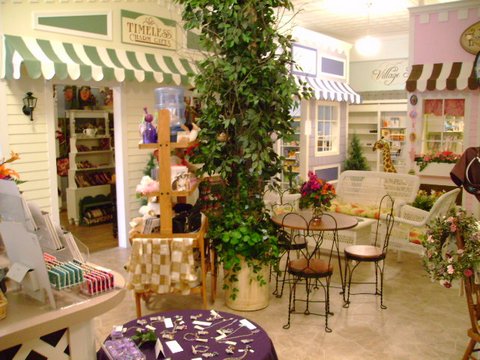
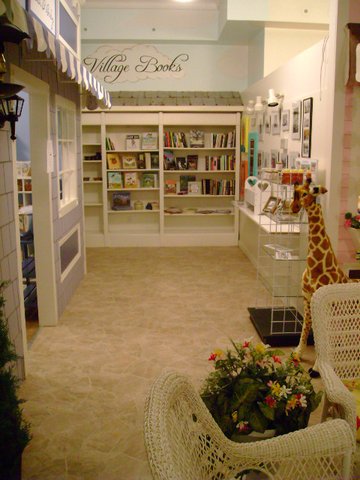
A large historic two-story building on the square was in the process of being renovated. I talked to the owner about my idea to have a retail complex on the first floor. I would call it “The Village”, and it would consist of small boutique-type shops surrounding a central courtyard. The shops would be designed with wood façade fronts to replicate a turn-of-the century Iowa village. Clapboard siding, awnings and window boxes would be features, and each shop front would be different. I would rent the main area from the building’s owner, divide it into small shops at my own expense, and those shop “owners” would pay me rent.
In addition, the courtyard would feature vendor carts, and a comfortable sitting area (our “gentlemen’s area”, we call it!) Complimentary coffee—or in the summer, lemonade— would be available. The rent for the vendor carts would be on a month-to-month basis, and would give timid souls the opportunity to “get their feet wet” in retail before moving into a shop. Thus The Village would act as a true incubator: vendor cart users might move into shops, and shop owners might move on to their own stand-alone shops.
 A central checkout area would enable shoppers to wander from store to store with their shopping basket without having to pay for their purchases in each shop. Shop owners would not need individual counters and employees in their shop, allowing for the maximization of space.
I knew I wanted to concentrate on retail…not beauty shops, insurance, consignment shops or tattoo parlors! Some ideas for shops I originally envisioned:
Once I got the go-ahead from the building’s owner, I set to work designing the complex—I wanted to stay true to the 1890s architecture of Washington— and I wanted to maximize every inch of space. No one could quite envision what I had in mind, and those who could told me the space was too small. They didn’t know what I was going to do with a pole right smack in the middle of the store (it became a tree!), and my banker asked my husband if I was “crazy”!!!
 We began construction in the fall of 2007, and moved into The Village in July of 2008…the day they poured concrete for the sidewalk in front of our store! Since the downtown area was such a mess, we weren’t able to have a Grand Opening until the next summer! But that didn’t stop the customers from coming!
I was fortunate to find five varied and unique shops to fill the Village at the beginning. The current residents of The Village are:
 The Village shops range from 80 to 144 square feet, with most being 120 sq ft. The rent is based on square footage, and includes all utilities, liability insurance, some expenses such as packaging, fees and dues, minimal advertising, as well as the additional “common space” in the courtyard and the display windows. In addition, there is a “gallery wall”, where local artists can display their work for a small commission fee.
 All shop owners take turns working at the central check out counter, the hours they work are based on the square footage of their shops(s). This eliminates the further expense of hiring part time help.
The recession years haven’t been the best climate for retail, but we are persevering. The economy took a nose dive, and suddenly no one had any money. We were counting on attracting customers from Iowa City and Cedar Rapids, but then came the floods, and those poor souls had to use their shopping money to rebuild their homes. The higher gas prices actually worked in our favor, as those spur of the moment trips to the mall became less frequent. Then there was the street construction, a bitter cold and icy winter, and a mini-tornado! The plagues of Egypt had nothing on us! We began to think we were jinxed.
But compliments from the townspeople keep us going; and daily we hear things like “This is so neat!”; “It looks like Galena in here!”; from a group of Iowa City women: “To heck with the Amanas…we’re coming here from now on!”, and “I live in St. Louis, and I can’t find some of these things there!”.
I truly believe that this is the future of retail in small communities, and we plan to be here for a long time!
Guest post by Cathy Lloyd, The Village
In the summer of 2007, I had an idea to help the state of retail on the square in downtown Washington, Iowa. Since Wal-Mart came to town in the ‘70s, there had been a steady decline in the number of retail businesses in the downtown area. I hoped by making shopping an “experience” we could keep some Washington people in town instead of defecting to Iowa City….but I knew it would have to be really unique.
A large historic two-story building on the square was in the process of being renovated. I talked to the owner about my idea to have a retail complex on the first floor. I would call it “The Village”, and it would consist of small boutique-type shops surrounding a central courtyard. The shops would be designed with wood façade fronts to replicate a turn-of-the century Iowa village. Clapboard siding, awnings and window boxes would be features, and each shop front would be different. I would rent the main area from the building’s owner, divide it into small shops at my own expense, and those shop “owners” would pay me rent.
In addition, the courtyard would feature vendor carts, and a comfortable sitting area (our “gentlemen’s area”, we call it!) Complimentary coffee—or in the summer, lemonade— would be available. The rent for the vendor carts would be on a month-to-month basis, and would give timid souls the opportunity to “get their feet wet” in retail before moving into a shop. Thus The Village would act as a true incubator: vendor cart users might move into shops, and shop owners might move on to their own stand-alone shops.
The Village courtyard between the stores includes comfortable places to sit, called the “gentlemen’s area.” Photo by Cathy Lloyd.
I knew I wanted to concentrate on retail…not beauty shops, insurance, consignment shops or tattoo parlors! Some ideas for shops I originally envisioned:
- Year–Round Xmas Shop
- Books and Stationery Shop
- Women’s Specialty Shop
- Quilt Shop
- Antique Shop
- Tea Room
Once I got the go-ahead from the building’s owner, I set to work designing the complex—I wanted to stay true to the 1890s architecture of Washington— and I wanted to maximize every inch of space. No one could quite envision what I had in mind, and those who could told me the space was too small. They didn’t know what I was going to do with a pole right smack in the middle of the store (it became a tree!), and my banker asked my husband if I was “crazy”!!!
The column that turned into a tree, and right next to it, one of the vendor carts that gives hopeful retailers an inexpensive way to get started. Photo by Cathy Lloyd.
I was fortunate to find five varied and unique shops to fill the Village at the beginning. The current residents of The Village are:
- “Girlfriends” gifts for girls of all ages;
- “Petticoat Ranch” a touch of the Old West;
- “Village Kids” a spot for tots;
- “The Soaring Sparrow” gourmet coffees, teas and linens
- “Creations by Char” unique, handpainted clothing and accessories
- “Plethora” featuring shabby chic handpainted furniture and accessories
A typical shop in The Village. Photo by Cathy Lloyd.
You can see how each shop in The Village has its own front. The gallery wall gives local artists an affordable place to put their art on sale. Photo by Cathy Lloyd.
The recession years haven’t been the best climate for retail, but we are persevering. The economy took a nose dive, and suddenly no one had any money. We were counting on attracting customers from Iowa City and Cedar Rapids, but then came the floods, and those poor souls had to use their shopping money to rebuild their homes. The higher gas prices actually worked in our favor, as those spur of the moment trips to the mall became less frequent. Then there was the street construction, a bitter cold and icy winter, and a mini-tornado! The plagues of Egypt had nothing on us! We began to think we were jinxed.
But compliments from the townspeople keep us going; and daily we hear things like “This is so neat!”; “It looks like Galena in here!”; from a group of Iowa City women: “To heck with the Amanas…we’re coming here from now on!”, and “I live in St. Louis, and I can’t find some of these things there!”.
I truly believe that this is the future of retail in small communities, and we plan to be here for a long time!
Subscribe to:
Posts (Atom)